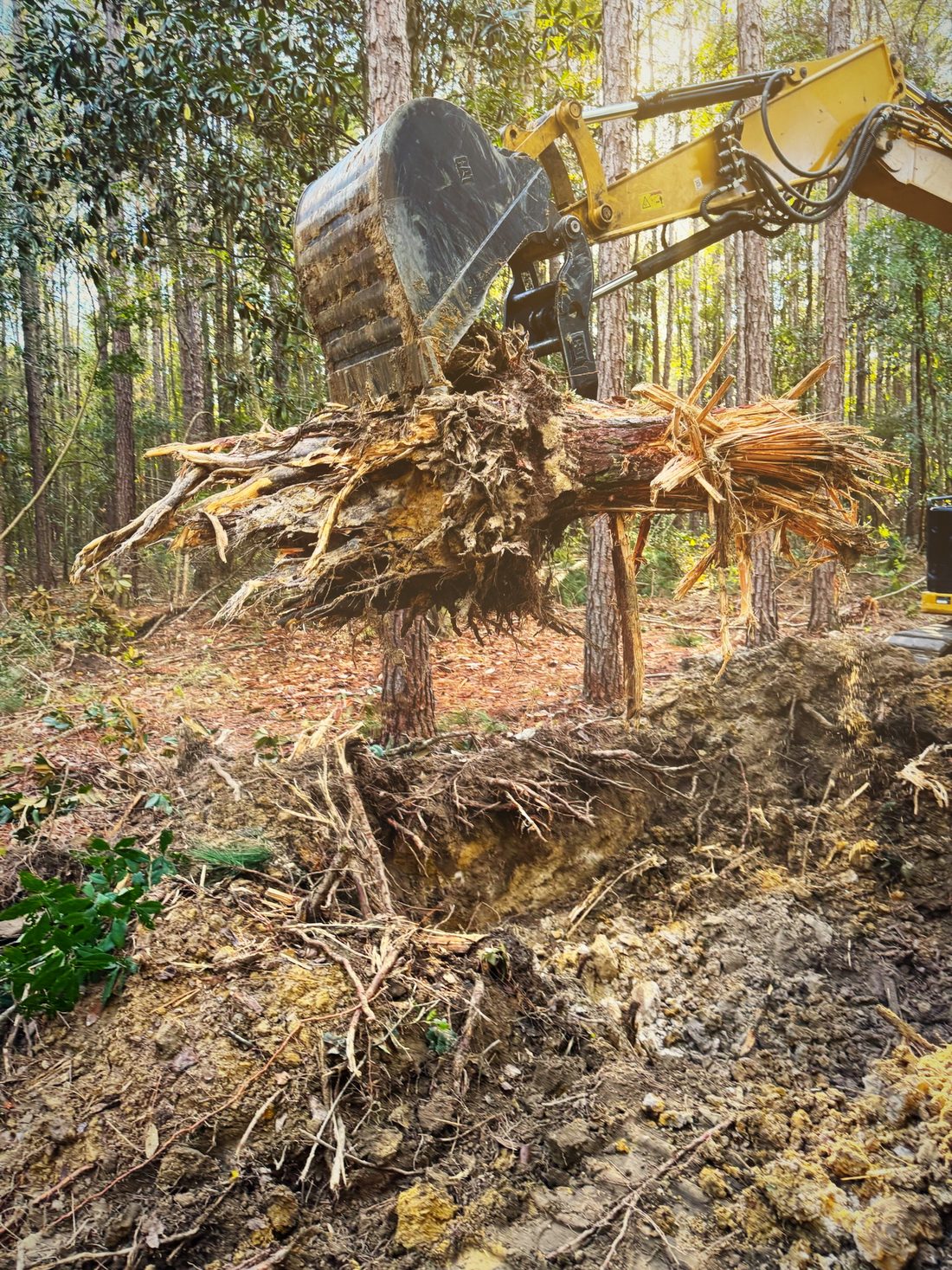
No settling
A root ball left under fill rots out over years and the ground above it drops.

Stump Removal
Pulled whole or ground down — so what's under your pad, pasture or yard isn't slowly rotting into a hole.
Two ways to do it
Grinding takes the stump down below grade with a cutting wheel and leaves the root system in the ground. It's quicker, it's cheaper, and it's the right call in a finished yard where you want to plant grass over it and you're not building on it.
Pulling takes the root ball out whole with an excavator. It leaves a hole that has to be filled and compacted, and it costs more — but there's nothing left underground to rot, settle and take your slab or your driveway down with it years later.
If anything is going to be built on that spot, pull it. If it's yard, grind it.
What's included
A root ball left under fill rots out over years and the ground above it drops.
Some species will come back off a cut stump. Out of the ground, it doesn't.
Nobody wants to find a stump with a trencher, a post hole digger or a footing.
Good to know
Grinding, mostly yes — it's contained and the mess is chips. Pulling a large root ball out of an established lawn will damage the ground around it; there's no version of that which doesn't.
Backfill and compact it. A hole from a pulled root ball will settle if it's just pushed full of loose dirt and left.
We can, or they can stay on site in a pile. It affects the price either way, so we'll agree it before we start.
Free estimates
Call or text (601) 522-6821 — estimates are free and there's no pressure attached.