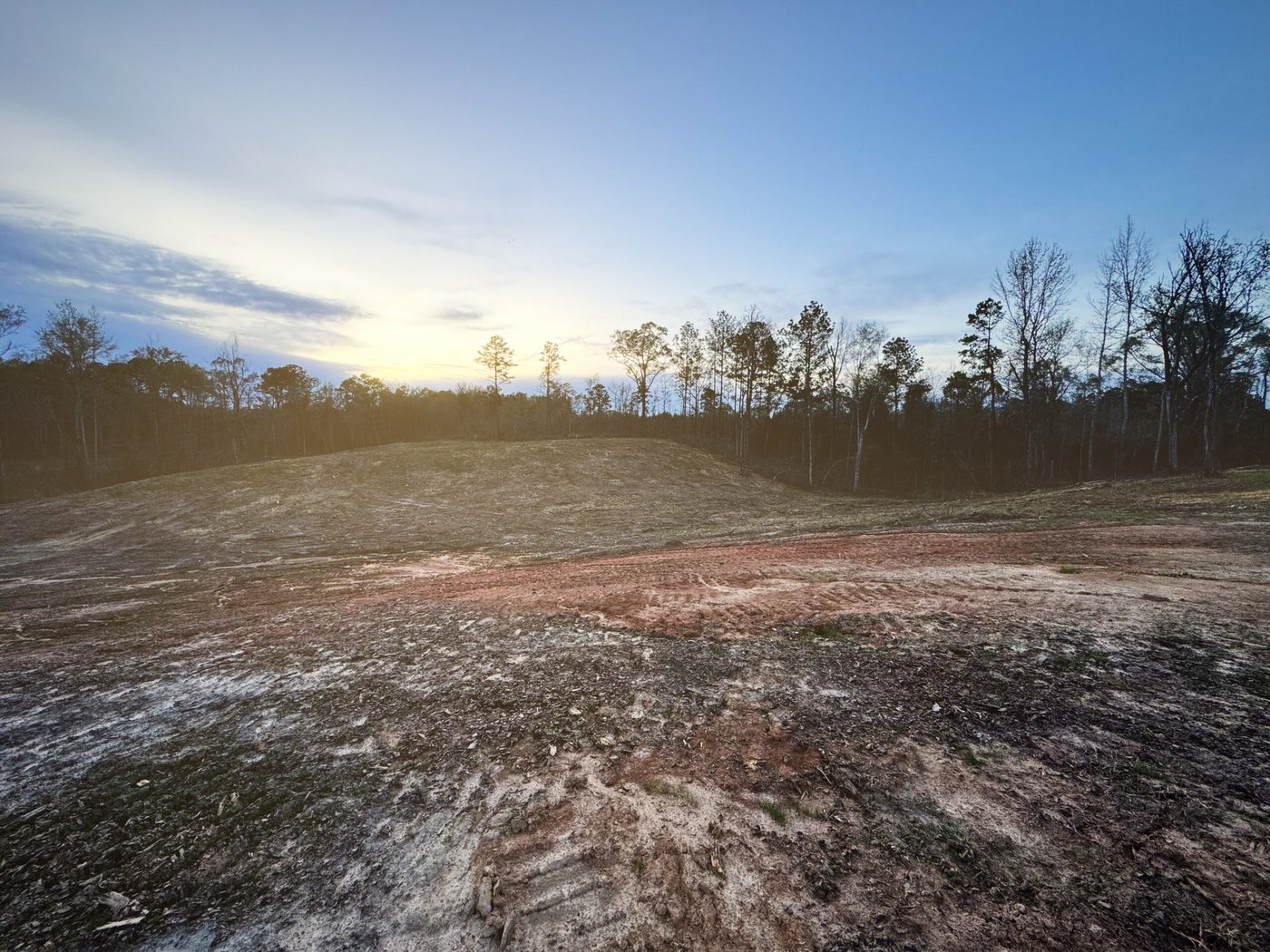
Faster, and cheaper
No second and third pass to haul and burn — the machine does it once and it's done.

Forestry Mulching
Brush and small timber ground into mulch right where it stands — nothing to burn, nothing to haul off.
What it is
A mulching head on a tracked machine grinds standing vegetation into chips and lays them back down on the ground. There's no cutting, then piling, then burning, then hauling — it's one operation, and when the machine leaves, the job is finished.
That makes it the cheapest honest way through overgrown property, and usually the fastest. It's the right tool for grown-up pasture, thick understory, briars and privet, small hardwood and pine, fence lines and trails.
Where it isn't the right tool: big timber, and anywhere the ground has to end up bare. A mulcher will not take out a large root ball, and it leaves a chip layer behind.
What's included
No second and third pass to haul and burn — the machine does it once and it's done.
Tracked weight spread out, roots left holding the soil, chips left as cover instead of bare dirt.
No burn pile sitting in the middle of your property for a month waiting on a dry day.
 The mulch layer
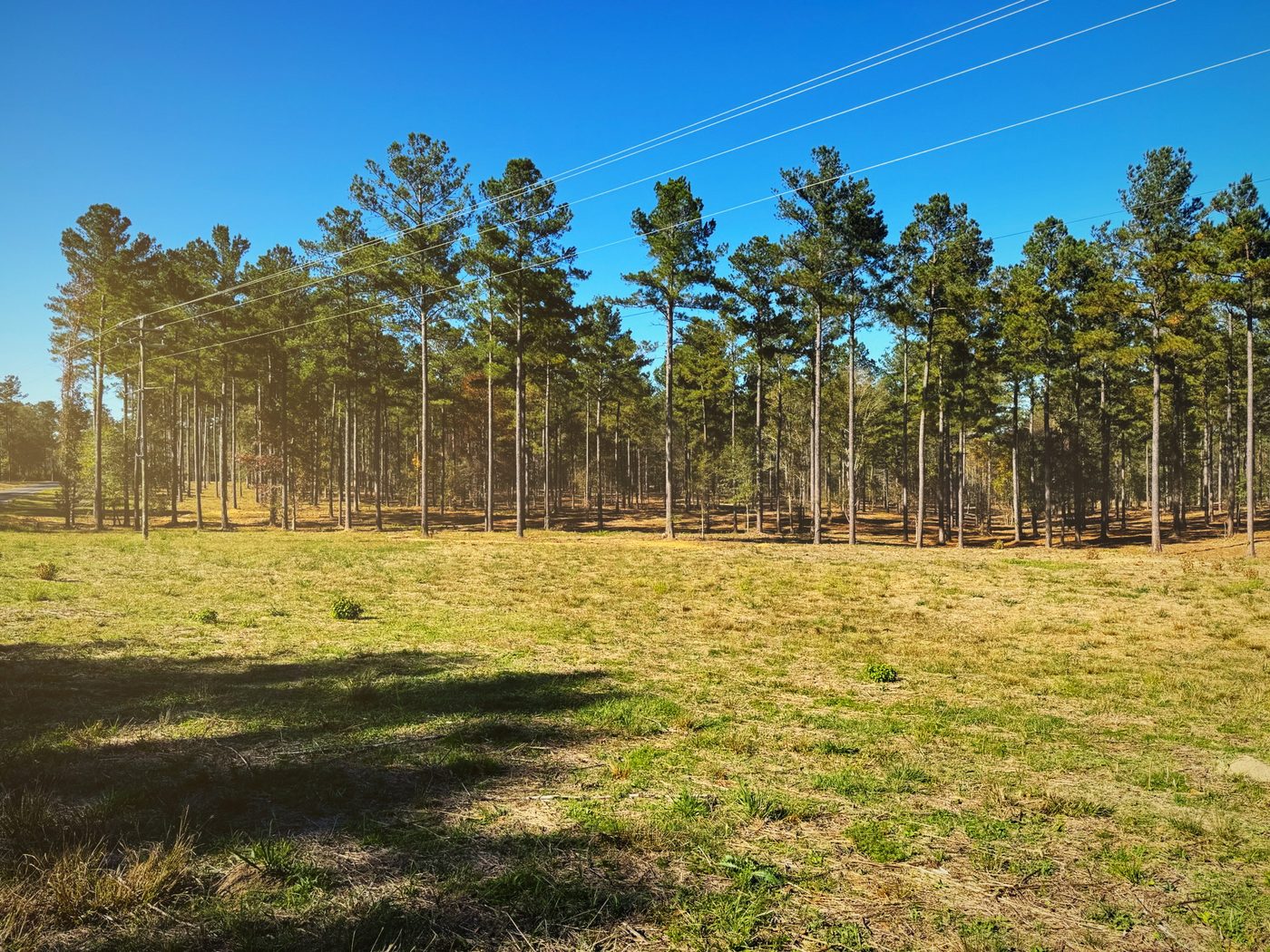
 The mulch layer
The chips aren't waste — they're a cover. They hold moisture, they keep the soil from washing on a slope, and they break down into the ground over the following seasons.
They also suppress what you just cut. Bare dirt grows the brush back fastest; a chip layer slows it down considerably.
Good to know
There's a practical limit, and it's smaller than people expect. Brush, briars, saplings and small trees are its home ground. Once you're into real timber it's slow and hard on the machine, and clearing is the better answer. We'll tell you which side of that line your property is on.
Whatever wasn't killed at the root will try. The mulch layer slows it down, but mulching is a reset, not a permanent kill. Most people get several seasons before it wants another pass — less if it's privet or briars.
Yes, and that's one of the real advantages. Specific trees, food plots, lines, ponds, fences — mark what stays and the operator works around it.
Free estimates
Call or text (601) 522-6821 — estimates are free and there's no pressure attached.